Magacín digital de cultura contemporánea
AÑO 21 - Miércoles, 21 de Octubre de 2026 a las 19:03:58 - Madrid (Spain-Europe)
TRADUCCIÓN
Perception, concealment, blindness
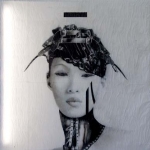
© Rómulo Royo
Siameses, 2009
Técnica mixta sobre tela traslúcida retroiluminada, montado en aluminio
165 x 165 cm
Siameses, 2009
Técnica mixta sobre tela traslúcida retroiluminada, montado en aluminio
165 x 165 cm
Idioma: English
Fernando Castro Flórez
The Foundation Alcort of Binéfar (Huesca, Spain) shows from
March, 31th to April, 9th, the exhibition Perception, Concealment, Blindness, of the Spanish artist Rómulo Royo.
The face and the otherness.
A face is an invaluable part of any portrait, an epiphany which can never be embraced. Variations and small differences evoke a certain repetitive disentrenchment where one discovers the power of simulation, which is, together with the efficiency of displacement, where one’s appearance fades into in the disguise . It may in fact be that a face is nothing more than a backdrop for a scene that does not develop, except in the intermission. It is as if there is a permanent metamorphosis, yet dismantling the face is by no means simple, as Deleuze reminds us, one can easily slip into madness. It is not by chance that the schizophrenic simultaneously loses the sense of his face, both his own and those of others, or the sense of his surroundings, his language and its predominant meanings. "Dismantling one's face – as he affirms in A Thousand Plateaus – is the same as climbing over the wall of meaning, and climbing out of the black hole of subjectivity" . We also know that fantasy governs reality and a mask can never be lifted without taking a bit of flesh along with it. The Other can have the features of an abyss, in the same way that symbolic order is found to be hidden by the fascinating presence of the object of fantasy "We experience it every time we look into the eyes of another person and feel the depth of their gaze" . It is prudent to remember that when the subject gets too close to fantasy, (self)nullification occurs. The art is left as aphanisis . Medusa’s gaze joins together dreams and death definitively . There is no question that the altered face is crucial to the work of Rómulo Royo, who paints over translucent sheets of papers as if he aims to evoke the idea, to quote Valery, that what is deepest is in fact the skin. In a recently published essay, Glòria Bosch recalls Rómulo Royo’s trip to Morocco where he becomes literally fascinated by the faces which hide behind a gesture: "these components of strangeness and marginality provoke him and he provokes them in his work. Royo absorbs the human being with all their contradictions and from their culture he delves into the contamination, this process of hybridization that occurs both in his content and his working methods" . This artist contemplates the many races and multiplicities of man not as rarities, but as a possibility of reaching something which unites us: a cosmic egg, planet Earth, primordial androgyny, a solid body .
Curate by: Fernando Castro Flórez
The face and the otherness.
A face is an invaluable part of any portrait, an epiphany which can never be embraced. Variations and small differences evoke a certain repetitive disentrenchment where one discovers the power of simulation, which is, together with the efficiency of displacement, where one’s appearance fades into in the disguise . It may in fact be that a face is nothing more than a backdrop for a scene that does not develop, except in the intermission. It is as if there is a permanent metamorphosis, yet dismantling the face is by no means simple, as Deleuze reminds us, one can easily slip into madness. It is not by chance that the schizophrenic simultaneously loses the sense of his face, both his own and those of others, or the sense of his surroundings, his language and its predominant meanings. "Dismantling one's face – as he affirms in A Thousand Plateaus – is the same as climbing over the wall of meaning, and climbing out of the black hole of subjectivity" . We also know that fantasy governs reality and a mask can never be lifted without taking a bit of flesh along with it. The Other can have the features of an abyss, in the same way that symbolic order is found to be hidden by the fascinating presence of the object of fantasy "We experience it every time we look into the eyes of another person and feel the depth of their gaze" . It is prudent to remember that when the subject gets too close to fantasy, (self)nullification occurs. The art is left as aphanisis . Medusa’s gaze joins together dreams and death definitively . There is no question that the altered face is crucial to the work of Rómulo Royo, who paints over translucent sheets of papers as if he aims to evoke the idea, to quote Valery, that what is deepest is in fact the skin. In a recently published essay, Glòria Bosch recalls Rómulo Royo’s trip to Morocco where he becomes literally fascinated by the faces which hide behind a gesture: "these components of strangeness and marginality provoke him and he provokes them in his work. Royo absorbs the human being with all their contradictions and from their culture he delves into the contamination, this process of hybridization that occurs both in his content and his working methods" . This artist contemplates the many races and multiplicities of man not as rarities, but as a possibility of reaching something which unites us: a cosmic egg, planet Earth, primordial androgyny, a solid body .
Curate by: Fernando Castro Flórez
NOTICIA ORIGINAL
ÚLTIMAS NOTICIAS EN PORTADA


MANTENIDO POR

© nexo5.com :: All rights reserved :: Since Sep 20, 2006 -