Magacín digital de cultura contemporánea
AÑO 21 - Lunes, 19 de Octubre de 2026 a las 19:37:14 - Madrid (Spain-Europe)
TRADUCCIÓN
Estiarte brings together works by Susana Solano created as a notebook during journeys made by the artist in the last 20 years
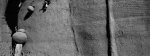
© Susana Solano
Benin 1-Tayakou
Fotografía, 2002
Benin 1-Tayakou
Fotografía, 2002
Idioma: English
nexo5.com
Estiarte brings together the photographic work of Susana Solano created as a notebook of impressions and visual jottings produced during journeys made by the artist in the last 20 years. The solo exhibition, titled Places, will be showed from April 8th to 25th May.
Ethiopia, Niger, Japan, Guinea Bissau, Yemen are some of the places where Susana Solano (Barcelona, 1946) has visited with the look of a traveller, curious and profoundly human. Using several cameras, one of them a Hasselblad always at hand, the Catalan artist records her visual impressions, her spatial-sentimental demarcations of random encounters with what is different, with the paradoxical closeness of men of distant cultures and countries, in their social and personal relations, with the significance of the cultural event of places far from our idea of the world. "In journeys", the artist writes in her notebooks for 1995, "I belong to nature. In nature, I detect the misunderstanding of how I live with respect to time, to reason, to beauty, to growth, to impermanence, to energy."
These photographs, selected in small groups and taken between 1990 and 2010, tackle the photographic look as the shaping of an anthropological space, witness of the emotional instant, at all times respectful of the human beings they show in order to "convert the sensation and the remembrance into presence, into the space of art ... as with sculpture, photography recollects," the artist writes in those notebooks.
If, in general terms, Susana Solano's sculpture prioritises relations of materials with space and the hermetic interrelation of her structures, emphasising the material values of iron and the regularity of a mesh, in their own surface, highlighting in many cases the personal mark on the skin of the sculpture, with these photographs the artist would be seeking to bring us closer to the surface of things and people whom we see in their relations with the rest, to place us close, to caress our emotion with the skin of the world: "There are many experiences which shape the skin of our life. But some have the capacity to penetrate like arrows into the interior of existence, reaching without any order or harmony certain neuralgic zones which constitute the motor of acts, of thoughts, of the always intricate sentimental springs. Those profound experiences end up by unconsciously, involuntarily, being transformed into a universe dominated by memory and image. The image of the memory is filed outside of time, navigating in freedom through the irregular spaces of the I, and at the same time reserving the right to emerge or hide according to its whim", commented the artist in conversation with Aurora García in 1989.
The photography in Susana Solano's work performs a dual function. On the one hand, when the artist sometimes reserves figurative images for dialoguing with the three-dimensional works, which illuminate and construct the transformation into the spatial relation of its whole.
On the other hand, the visual memory of a travel diary, like those making up this exhibition, in small format of proximity and copies on baryta paper, they speak to us of the classical genre of traditional photography, of the reporter, of the work of the chronicler of the human soul which Susana Solano creates here: "My interest with these photographs lies in the commitment which provokes the choice and the respect of what is portrayed or captured in the images. Places, these photographs brought together, would show "the feeling" of landscapes and daily acts, and on the other hand common attitudes in numerous intersections: fleeting glances, the energy, the poetic or the politic... maintaining and respecting the emotions of the silence that was generated at the time by the random encounter with places. In short, these images are notes, memory and nudges", Susana Solano tells us.
In many of these photos, as with a large part of her sculptural photography, the skin of water is very much present. "One of my earliest childhood memories," Susana told us, "is of a swing which my father installed just above the irrigation pool and in which my sister and I literally used to swing above the water."
And as Aurora García points out: "The evocation of water does not just signify a way of materialising something indelible in the universe of the memories and experiences of play belonging to the sculptress‘s childhood in the countryside, it goes beyond that, it concerns the presence - even if in absence - of the necessary liquid for life and health, of a flux that is linked to the passage of time both to natural history and to the history of civilisations. Because, in spite of the fact that many of Susana Solano's works have the form of storage tanks, what she is claiming is not stagnant and turbid water but instead the crystalline liquid that flows and serves for drinking, for watering, for healing or for bathing."
Susana Solano was awarded the National Prize for Plastic Arts of Spain in 1988. She was selected for the Kassel Documenta in 1987 and 1992, in 1987 she took part in the XIX International Biennial of Sao Paulo and in the Venice Biennial in 1988 and 1993.
Ethiopia, Niger, Japan, Guinea Bissau, Yemen are some of the places where Susana Solano (Barcelona, 1946) has visited with the look of a traveller, curious and profoundly human. Using several cameras, one of them a Hasselblad always at hand, the Catalan artist records her visual impressions, her spatial-sentimental demarcations of random encounters with what is different, with the paradoxical closeness of men of distant cultures and countries, in their social and personal relations, with the significance of the cultural event of places far from our idea of the world. "In journeys", the artist writes in her notebooks for 1995, "I belong to nature. In nature, I detect the misunderstanding of how I live with respect to time, to reason, to beauty, to growth, to impermanence, to energy."
These photographs, selected in small groups and taken between 1990 and 2010, tackle the photographic look as the shaping of an anthropological space, witness of the emotional instant, at all times respectful of the human beings they show in order to "convert the sensation and the remembrance into presence, into the space of art ... as with sculpture, photography recollects," the artist writes in those notebooks.
If, in general terms, Susana Solano's sculpture prioritises relations of materials with space and the hermetic interrelation of her structures, emphasising the material values of iron and the regularity of a mesh, in their own surface, highlighting in many cases the personal mark on the skin of the sculpture, with these photographs the artist would be seeking to bring us closer to the surface of things and people whom we see in their relations with the rest, to place us close, to caress our emotion with the skin of the world: "There are many experiences which shape the skin of our life. But some have the capacity to penetrate like arrows into the interior of existence, reaching without any order or harmony certain neuralgic zones which constitute the motor of acts, of thoughts, of the always intricate sentimental springs. Those profound experiences end up by unconsciously, involuntarily, being transformed into a universe dominated by memory and image. The image of the memory is filed outside of time, navigating in freedom through the irregular spaces of the I, and at the same time reserving the right to emerge or hide according to its whim", commented the artist in conversation with Aurora García in 1989.
The photography in Susana Solano's work performs a dual function. On the one hand, when the artist sometimes reserves figurative images for dialoguing with the three-dimensional works, which illuminate and construct the transformation into the spatial relation of its whole.
On the other hand, the visual memory of a travel diary, like those making up this exhibition, in small format of proximity and copies on baryta paper, they speak to us of the classical genre of traditional photography, of the reporter, of the work of the chronicler of the human soul which Susana Solano creates here: "My interest with these photographs lies in the commitment which provokes the choice and the respect of what is portrayed or captured in the images. Places, these photographs brought together, would show "the feeling" of landscapes and daily acts, and on the other hand common attitudes in numerous intersections: fleeting glances, the energy, the poetic or the politic... maintaining and respecting the emotions of the silence that was generated at the time by the random encounter with places. In short, these images are notes, memory and nudges", Susana Solano tells us.
In many of these photos, as with a large part of her sculptural photography, the skin of water is very much present. "One of my earliest childhood memories," Susana told us, "is of a swing which my father installed just above the irrigation pool and in which my sister and I literally used to swing above the water."
And as Aurora García points out: "The evocation of water does not just signify a way of materialising something indelible in the universe of the memories and experiences of play belonging to the sculptress‘s childhood in the countryside, it goes beyond that, it concerns the presence - even if in absence - of the necessary liquid for life and health, of a flux that is linked to the passage of time both to natural history and to the history of civilisations. Because, in spite of the fact that many of Susana Solano's works have the form of storage tanks, what she is claiming is not stagnant and turbid water but instead the crystalline liquid that flows and serves for drinking, for watering, for healing or for bathing."
Susana Solano was awarded the National Prize for Plastic Arts of Spain in 1988. She was selected for the Kassel Documenta in 1987 and 1992, in 1987 she took part in the XIX International Biennial of Sao Paulo and in the Venice Biennial in 1988 and 1993.
NOTICIA ORIGINAL
ÚLTIMAS NOTICIAS EN PORTADA


MANTENIDO POR

© nexo5.com :: All rights reserved :: Since Sep 20, 2006 -