Magacín digital de cultura contemporánea
AÑO 21 - Miércoles, 21 de Octubre de 2026 a las 12:13:01 - Madrid (Spain-Europe)
TRADUCCIÓN
Estiarte opens the season with Jan Dibbets: perspectives & studies
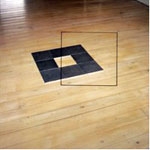
© JAN DIBBETS, 2004
Pesrpective Collections
Courtesy Estiarte Gallery (Madrid)
Pesrpective Collections
Courtesy Estiarte Gallery (Madrid)
Idioma: English
nexo5.com
Estiarte opens the season with Jan Dibbets and two portfolios of photographs belonging to the series Perspective Collection from 2004 in which Dibbets reflects upon his perspective corrections from the end of the sixties and Colour Studies taken by the Dutch artist between the years 1973 and 1976.
Jan Dibbets (born in Weert, Holland, 1941) started to display his works at the end of the sixties as part of the flow of currents of conceptual art, a field in which he has been a fundamental reference in Europe since 1969 when he began his first "perspective corrections" projects. These works were created as photographic constructions referring to the interiors of the artist's studio, or to land- and seascapes of his native country, and conceived as compound images ending in boundaries, expanded and modified with lines drawn in pencil or paint, in an exploration of the understanding of space in interrelation with his experience in real time, studying phenomena of perception applied to architecture and landscape.
In those tight photographic sequences, of perceptive subversion, Jan Dibbets, "armed with the visual pyramid of the camera obscura, proceeded to deconstruct the appearance consisting of the visual space conventionally represented by the photograph, multiplying the points of vision, fragmenting the exposure time and staggering the tonality of the light" says Gloria Moure, who certifies: "the creative approach of Jan Dibbets combines the idea of creation with knowledge and measurement, and embeds it in the indestructible hinge connecting the sensorial with the rational".
Jan Dibbets' analyses of space and formal structures are carried out under the idea of the fragment, suggested by his work with isolated elements, synecdoches of a perceptive world that is reconstructed in each look. His most recent works take partial architectural motifs, such as windows, as being representative fragmentary forms, isolated and emphasised in terms of elements of abstract expression and referential exponents of a non-described interior. A fragment is now a universe within a reality which is shaped by being perceived and which does not exist beforehand.
The series Perspective Collections conducts a revisitation of the original concept developed by the artist in the sixties, though now with an additional element of composition. In each work the corrector trapezoid drawn by Dibbets interacts with works by artists of his generation Sol Lewitt, Carl Andre, Robert Ryman, Robert Mangold or Donal Judd. What Dibbets proposes with his intervention is for our look to go beyond what is shown by a mere photographic image, leading us to less visible zones of space. That is his task as an artist, one which establishes the relation between the two dimensions of photography and the three dimensions of the works that he captures and modifies. As David Cleaton-Roberts has stated: "The Perspective Collections represent the first time that Dibbets has chosen to literally incorporate other artists´ works into his own and although their presence is not incidental, it would be wrong to assume that these are collaborations or that the sculptures and paintings are the core subjects of the photographs. Instead, he has used these works and the space which surrounds them to once again question the way we look at and perceive the created image".
Colour studies is the title of this set of works now recovered for this edition. It consists of ten photographs taken by Jan Dibbets between the years 1973 and 1976, a period in which the artist was making a very analytical recording of different plastic aspects of details to be found in a scanning of reality, and whose altered symmetries go along constructing the images-forms of Jan Dibbets, in which "the elimination of the fractionating of the image and the abandonment of the sequences in some way manage to revitalise the idea of instantaneous, but this being considered not as a pulsation of flux but instead as a materialisation of the possible coincidence, without any temporal or representative adherence at all, and in perfect harmony with the stated urge to achieve radical abstraction" concludes Gloria Moure. In Colour studies, the Dutch artist photographs the brilliant reflections of light and the surroundings on the metallised bodywork of different automobiles. The result is complexly pictorial, sophisticated and surprisingly contemporary on account of his clear conception of colour, a colour that is distant, enigmatic, technological and enormously pleasurable. These photos have been printed on Kodak Endura paper of 64 x 64 cm. in an edition of 40 copies.
Opening 4 September 2007 at eight p.m.
Jan Dibbets (born in Weert, Holland, 1941) started to display his works at the end of the sixties as part of the flow of currents of conceptual art, a field in which he has been a fundamental reference in Europe since 1969 when he began his first "perspective corrections" projects. These works were created as photographic constructions referring to the interiors of the artist's studio, or to land- and seascapes of his native country, and conceived as compound images ending in boundaries, expanded and modified with lines drawn in pencil or paint, in an exploration of the understanding of space in interrelation with his experience in real time, studying phenomena of perception applied to architecture and landscape.
In those tight photographic sequences, of perceptive subversion, Jan Dibbets, "armed with the visual pyramid of the camera obscura, proceeded to deconstruct the appearance consisting of the visual space conventionally represented by the photograph, multiplying the points of vision, fragmenting the exposure time and staggering the tonality of the light" says Gloria Moure, who certifies: "the creative approach of Jan Dibbets combines the idea of creation with knowledge and measurement, and embeds it in the indestructible hinge connecting the sensorial with the rational".
Jan Dibbets' analyses of space and formal structures are carried out under the idea of the fragment, suggested by his work with isolated elements, synecdoches of a perceptive world that is reconstructed in each look. His most recent works take partial architectural motifs, such as windows, as being representative fragmentary forms, isolated and emphasised in terms of elements of abstract expression and referential exponents of a non-described interior. A fragment is now a universe within a reality which is shaped by being perceived and which does not exist beforehand.
The series Perspective Collections conducts a revisitation of the original concept developed by the artist in the sixties, though now with an additional element of composition. In each work the corrector trapezoid drawn by Dibbets interacts with works by artists of his generation Sol Lewitt, Carl Andre, Robert Ryman, Robert Mangold or Donal Judd. What Dibbets proposes with his intervention is for our look to go beyond what is shown by a mere photographic image, leading us to less visible zones of space. That is his task as an artist, one which establishes the relation between the two dimensions of photography and the three dimensions of the works that he captures and modifies. As David Cleaton-Roberts has stated: "The Perspective Collections represent the first time that Dibbets has chosen to literally incorporate other artists´ works into his own and although their presence is not incidental, it would be wrong to assume that these are collaborations or that the sculptures and paintings are the core subjects of the photographs. Instead, he has used these works and the space which surrounds them to once again question the way we look at and perceive the created image".
Colour studies is the title of this set of works now recovered for this edition. It consists of ten photographs taken by Jan Dibbets between the years 1973 and 1976, a period in which the artist was making a very analytical recording of different plastic aspects of details to be found in a scanning of reality, and whose altered symmetries go along constructing the images-forms of Jan Dibbets, in which "the elimination of the fractionating of the image and the abandonment of the sequences in some way manage to revitalise the idea of instantaneous, but this being considered not as a pulsation of flux but instead as a materialisation of the possible coincidence, without any temporal or representative adherence at all, and in perfect harmony with the stated urge to achieve radical abstraction" concludes Gloria Moure. In Colour studies, the Dutch artist photographs the brilliant reflections of light and the surroundings on the metallised bodywork of different automobiles. The result is complexly pictorial, sophisticated and surprisingly contemporary on account of his clear conception of colour, a colour that is distant, enigmatic, technological and enormously pleasurable. These photos have been printed on Kodak Endura paper of 64 x 64 cm. in an edition of 40 copies.
Opening 4 September 2007 at eight p.m.
NOTICIA ORIGINAL
ÚLTIMAS NOTICIAS EN PORTADA


MANTENIDO POR

© nexo5.com :: All rights reserved :: Since Sep 20, 2006 -