Magacín digital de cultura contemporánea
AÑO 21 - Martes, 6 de Octubre de 2026 a las 05:44:40 - Madrid (Spain-Europe)
TRADUCCIÓN
The american artist Barbara Bloom shows her collections in New York
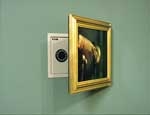
Barbara Bloom
Safe, 1998
© Barbara Bloom
Cortesía de la artista
Safe, 1998
© Barbara Bloom
Cortesía de la artista
Idioma: English
nexo5.com
"When the Japanese mend broken objects, they aggrandize the damage by filling the cracks with gold. They believe that when something's suffered damage and has a history it becomes more beautiful." Barbara Bloom
In a world saturated with images, American artist Barbara Bloom makes art that examines the nature of looking. Internationally known for her meticulously crafted installations that combine newly made and appropriated objects and pictures, Bloom challenges conventional perceptions about the meaning of art with wry commentary on the practice of collecting and the desire for possessions. From January 18 to May 4, 2008, the International Center of Photography (ICP) will present a major survey of Bloom's work titled The Collections of Barbara Bloom. Organized by ICP Chief Curator Brian Wallis, the exhibition will include more than 100 of Bloom's works and will be accompanied by a catalogue designed by the artist. Bloom is one of the leading members of the postmodern generation of artists that includes Cindy Sherman, Richard Prince, and Barbara Kruger. Her work incorporates photography and graphic design, some of it appropriated, but she is particularly noted for her witty and elegant art installations, which often contain unique objects that she has collected or had made. This retrospective will include arrangements of her past artworks, as well as specimens from her vast personal collections of ephemera and objects. Bloom also revisits previous installations, such as her noteworthy The Reign of Narcissism, first presented at the Los Angeles Museum of Contemporary Art in 1989, and Esprit de l'Escalier, which won the Due Mille Prize for the best young artist in the Aperto section of the Venice Biennale in 1988. In each case, she repositions the work or adds new elements, not only to blur the line between past and present but also to acknowledge how meaning is constructed by context.
As suggested by the title, this exhibition is comprised of -and is a meditation on- collections, gatherings of images, objects, and ideas, which, in a sense, constitute Bloom's autobiography. The exhibition is divided into eleven sections: Doubles, Innuendo, Belief, Blushing, Broken, Framing, Charms, Naming, Songs, Stand Ins, and Reading In. Within these groupings, Bloom engages the viewer in a dialogue on how we construct and are constructed by visual culture. Among the many improbable objects that the artist has made or found are a Playboy magazine in Braille, postage stamps featuring the works of contemporary artists, a chair upholstered with fabric bearing the artist's dental X-rays, a pornographic image printed on a grain of rice, ceramic bowls that have been broken and repaired with gold, and a complete set of Vladimir Nabokov's writings, with all the book covers redesigned by Bloom herself.
Barbara Bloom was born in Los Angeles in 1951; she studied at Bennington College, and with John Baldessari and Robert Irwin at the California Institute of the Arts. For many years she lived and worked in Amsterdam and Berlin. She has exhibited at the Museum of Modern Art, New York; the Museum of Contemporary Art, Los Angeles; the MAK, Vienna; the Parrish Art Museum, Southhampton, New York; and other international venues, including the Venice Biennale (1988) and documenta X, Kassel, Germany (1997). She is the recipient of awards from the Guggenheim Foundation, the Louis Comfort Tiffany Foundation, and the Getty Research Institute. She currently lives and works in New York City.The Collections of Barbara Bloom is accompanied by a fully illustrated artist's book, conceived and designed by Bloom, featuring texts by Dave Hickey and Susan Tallman, and published by ICP/Steidl.The exhibition is supported, in part, by public funds from the New York City Department of Cultural Affairs. Additional funding was provided by the Peter Norton Family Foundation.
In a world saturated with images, American artist Barbara Bloom makes art that examines the nature of looking. Internationally known for her meticulously crafted installations that combine newly made and appropriated objects and pictures, Bloom challenges conventional perceptions about the meaning of art with wry commentary on the practice of collecting and the desire for possessions. From January 18 to May 4, 2008, the International Center of Photography (ICP) will present a major survey of Bloom's work titled The Collections of Barbara Bloom. Organized by ICP Chief Curator Brian Wallis, the exhibition will include more than 100 of Bloom's works and will be accompanied by a catalogue designed by the artist. Bloom is one of the leading members of the postmodern generation of artists that includes Cindy Sherman, Richard Prince, and Barbara Kruger. Her work incorporates photography and graphic design, some of it appropriated, but she is particularly noted for her witty and elegant art installations, which often contain unique objects that she has collected or had made. This retrospective will include arrangements of her past artworks, as well as specimens from her vast personal collections of ephemera and objects. Bloom also revisits previous installations, such as her noteworthy The Reign of Narcissism, first presented at the Los Angeles Museum of Contemporary Art in 1989, and Esprit de l'Escalier, which won the Due Mille Prize for the best young artist in the Aperto section of the Venice Biennale in 1988. In each case, she repositions the work or adds new elements, not only to blur the line between past and present but also to acknowledge how meaning is constructed by context.
As suggested by the title, this exhibition is comprised of -and is a meditation on- collections, gatherings of images, objects, and ideas, which, in a sense, constitute Bloom's autobiography. The exhibition is divided into eleven sections: Doubles, Innuendo, Belief, Blushing, Broken, Framing, Charms, Naming, Songs, Stand Ins, and Reading In. Within these groupings, Bloom engages the viewer in a dialogue on how we construct and are constructed by visual culture. Among the many improbable objects that the artist has made or found are a Playboy magazine in Braille, postage stamps featuring the works of contemporary artists, a chair upholstered with fabric bearing the artist's dental X-rays, a pornographic image printed on a grain of rice, ceramic bowls that have been broken and repaired with gold, and a complete set of Vladimir Nabokov's writings, with all the book covers redesigned by Bloom herself.
Barbara Bloom was born in Los Angeles in 1951; she studied at Bennington College, and with John Baldessari and Robert Irwin at the California Institute of the Arts. For many years she lived and worked in Amsterdam and Berlin. She has exhibited at the Museum of Modern Art, New York; the Museum of Contemporary Art, Los Angeles; the MAK, Vienna; the Parrish Art Museum, Southhampton, New York; and other international venues, including the Venice Biennale (1988) and documenta X, Kassel, Germany (1997). She is the recipient of awards from the Guggenheim Foundation, the Louis Comfort Tiffany Foundation, and the Getty Research Institute. She currently lives and works in New York City.The Collections of Barbara Bloom is accompanied by a fully illustrated artist's book, conceived and designed by Bloom, featuring texts by Dave Hickey and Susan Tallman, and published by ICP/Steidl.The exhibition is supported, in part, by public funds from the New York City Department of Cultural Affairs. Additional funding was provided by the Peter Norton Family Foundation.
NOTICIA ORIGINAL
ÚLTIMAS NOTICIAS EN PORTADA


MANTENIDO POR

© nexo5.com :: All rights reserved :: Since Sep 20, 2006 -